Joyful celebration marks dedication of Vietnamese Martyrs Church
Nov 26, 2024
Local
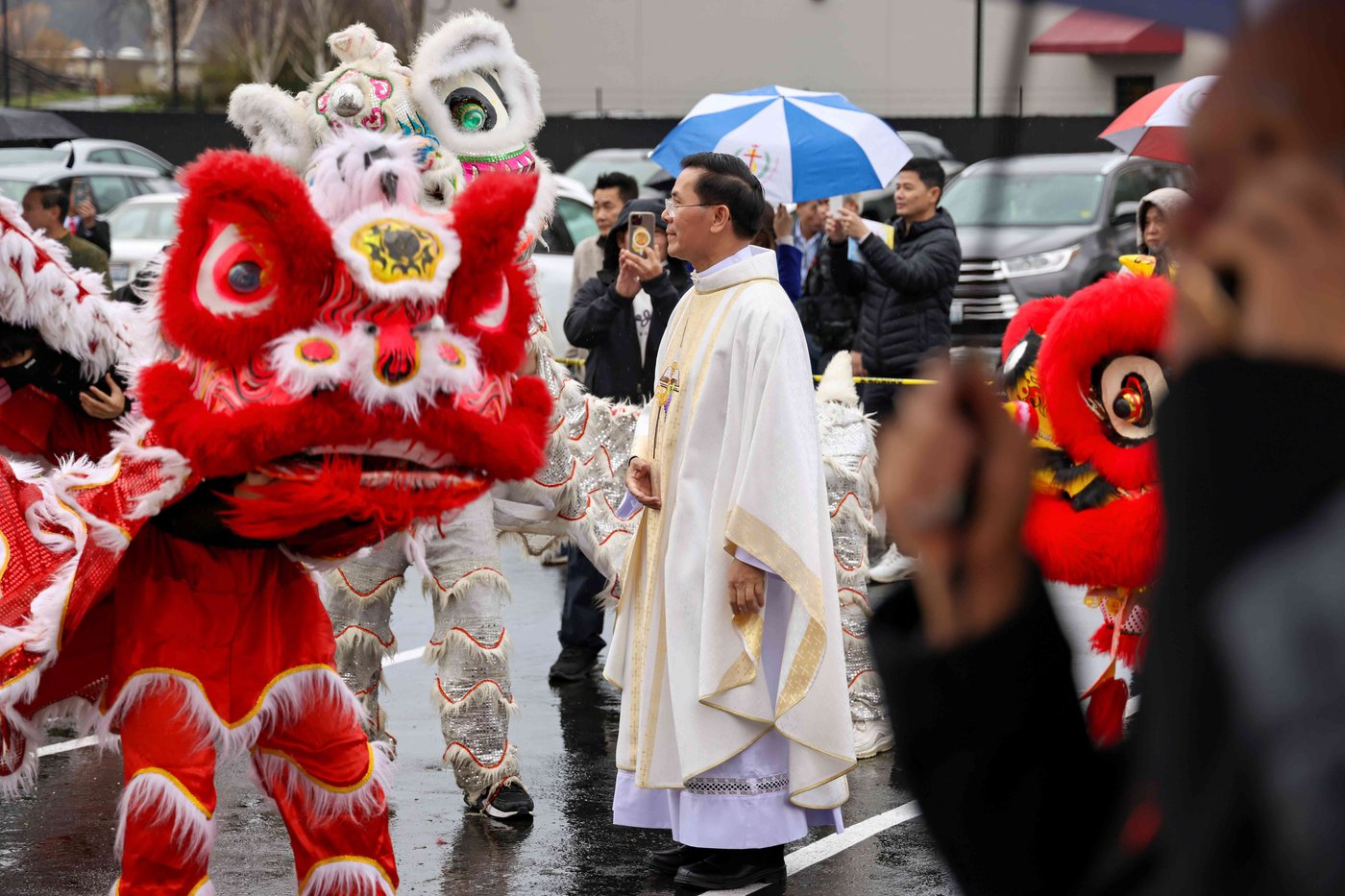
TUKWILA – After decades of dreaming, more than 10 years of fundraising and countless prayers, the members of Vietnamese Martyrs Parish joyfully celebrated the dedication of their new church Nov. 24.
Gathered at the foot of the 23 steps leading to the church entry, parishioners cheered, whooped and applauded when their pastor, Father Thanh X. Dao, received the keys from Archbishop Paul D. Etienne for the ceremonial opening of the church doors.
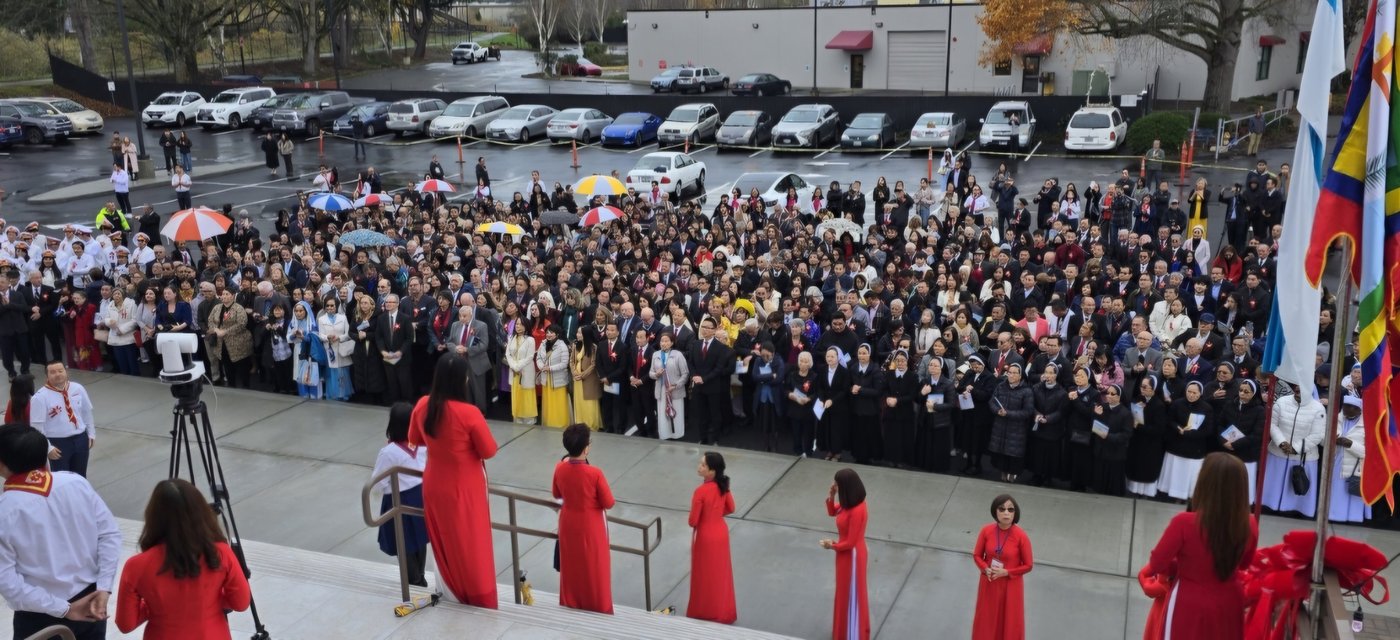
“We’ve been waiting for this for so long. I’m very, very excited,” said Tuyen Pham, who joined the Vietnamese Catholic Community in Seattle in 1989 — after escaping Vietnam in a small boat packed with 115 people, spending 10 days at sea and living in a refugee camp before coming to the United States.
“I feel very blessed to have a new church, to see that the Vietnamese Catholic community grow that fast and have a place to worship God,” said Pham, who is on the leadership team for the parish’s Vietnamese Eucharistic Youth Movement program.
“Hopefully the young next generation, they will keep that going,” she added.
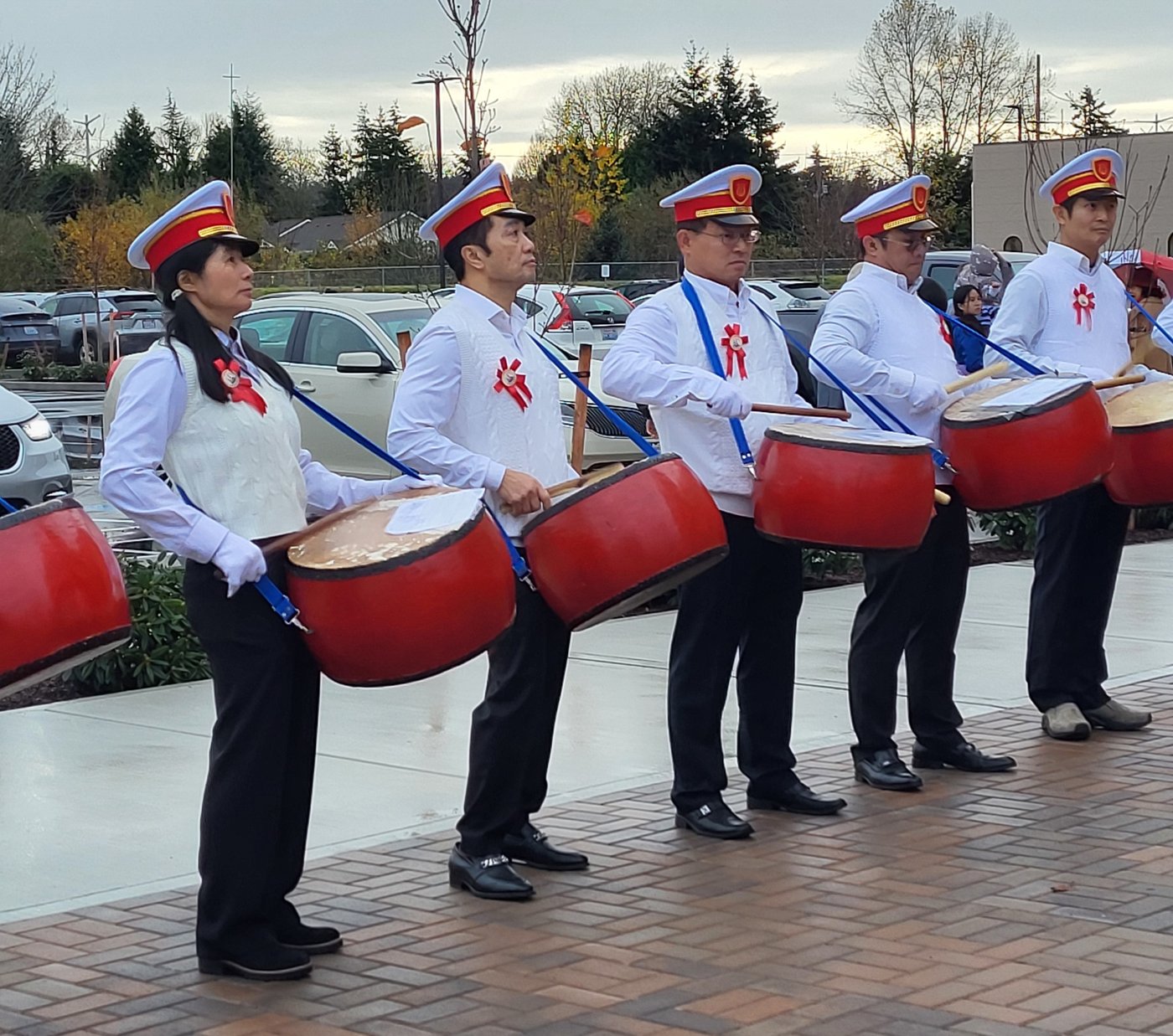
Concelebrating the dedication Mass with Archbishop Etienne were Archbishop Joseph Nguyen Chi Linh of Hue, Vietnam (Father Dao’s hometown); Benedictine Abbot Marion Q. Nguyen of Saint Martin’s Abbey in Lacey; and more than a dozen priests.
The 1,200 seats in the church were filled, with another 1,000 seats provided in an overflow gathering space on the ground floor, where parishioners watched the three-hour dedication Mass on video screens, said John Tien Luu, president of the pastoral council.
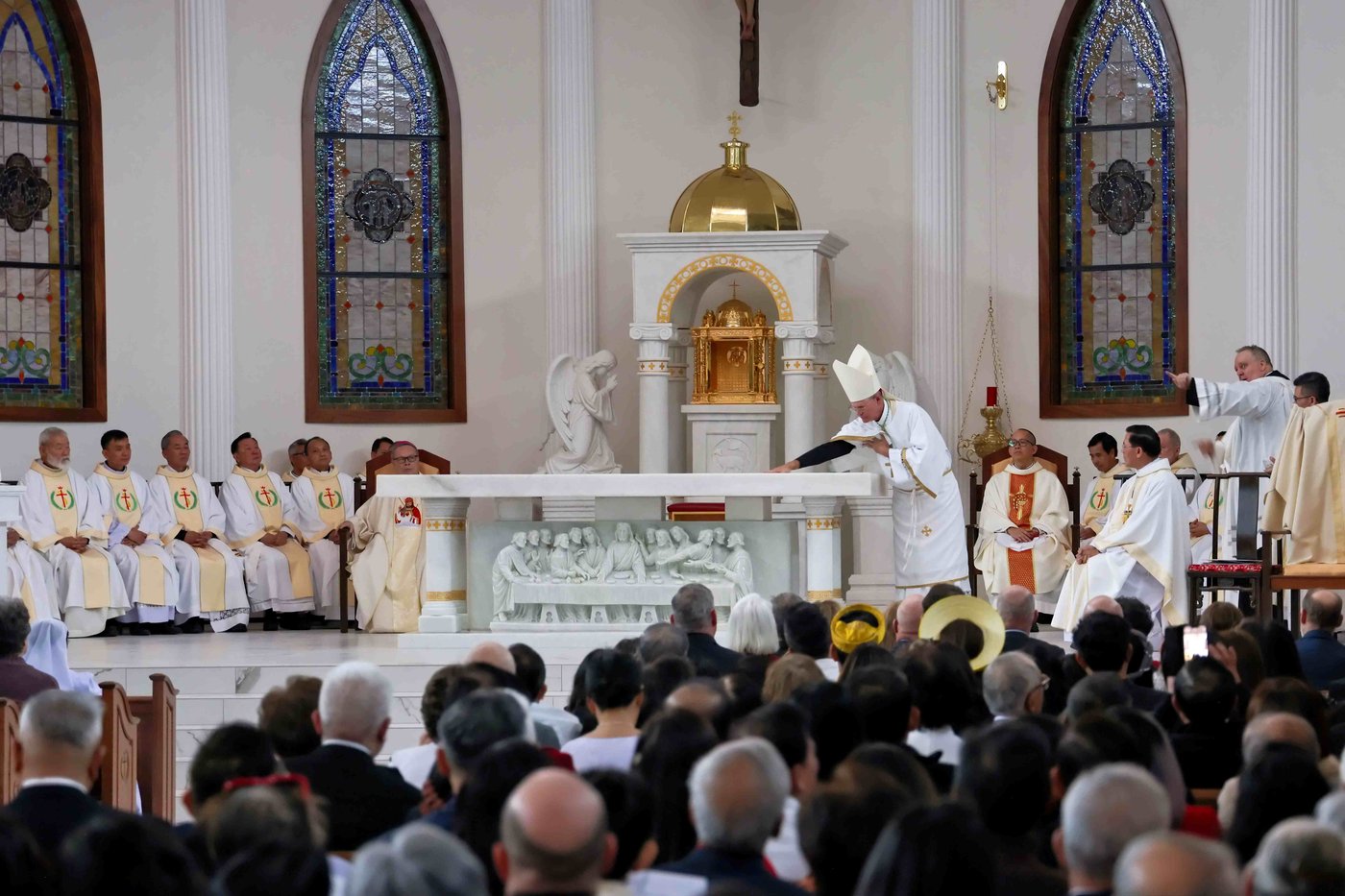
“Congratulations on building this beautiful church,” Archbishop Etienne told the congregation during his homily. “I wish to thank all of you for such a beautiful expression of faith and dedication,” he said, adding special congratulations to Father Dao, and inviting a round of applause for the whole community.
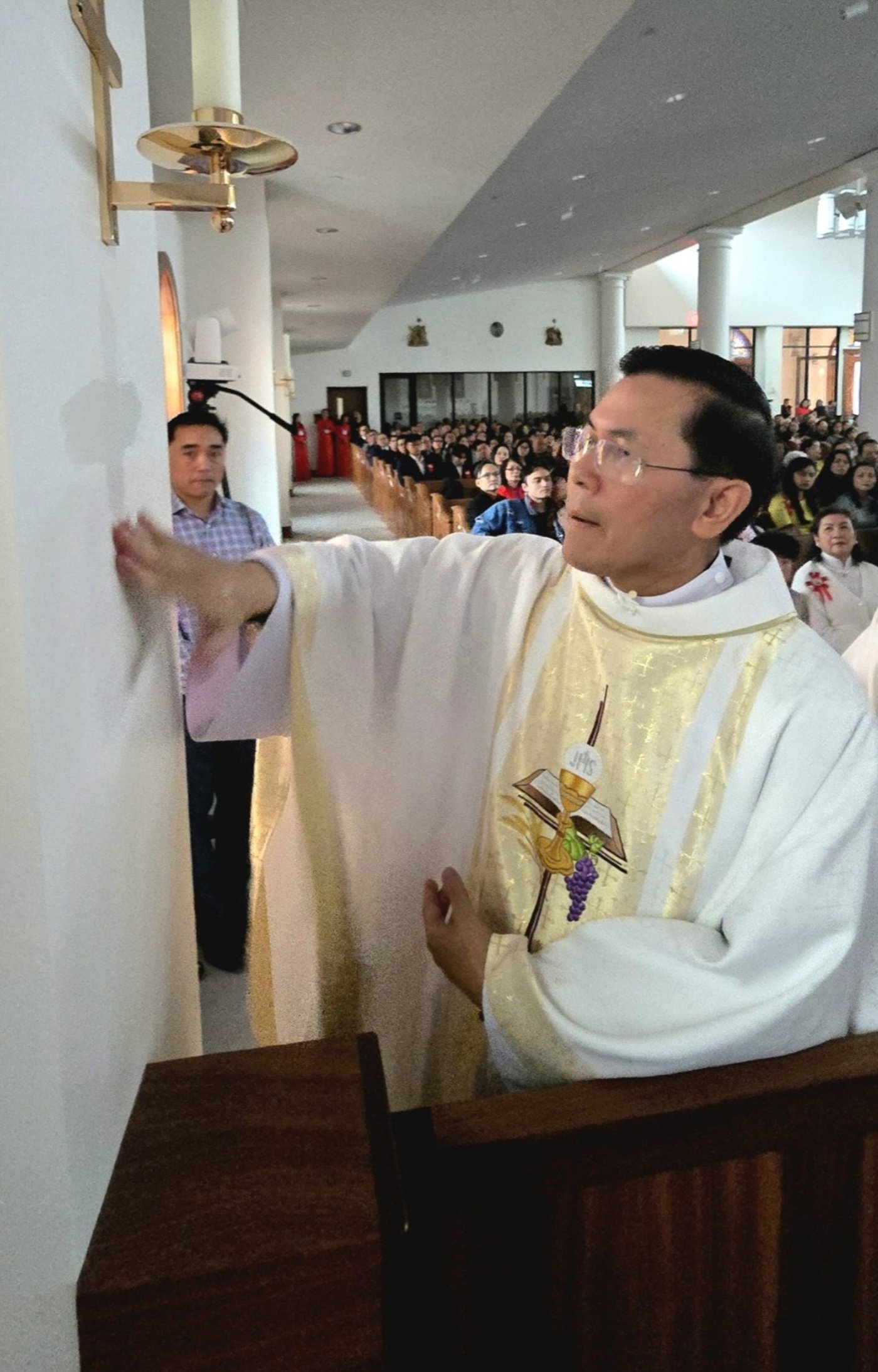
Father Dao, ordained in 2003, has been pastor since Nov. 19, 2010, the date Vietnamese Martyrs was established as a parish by Archbishop Alexander J. Brunett.
“We rejoice and give thanks to God today for our beautiful day for the great celebration, for the faith we celebrate together, especially in this sacred space,” Father Dao told those gathered.
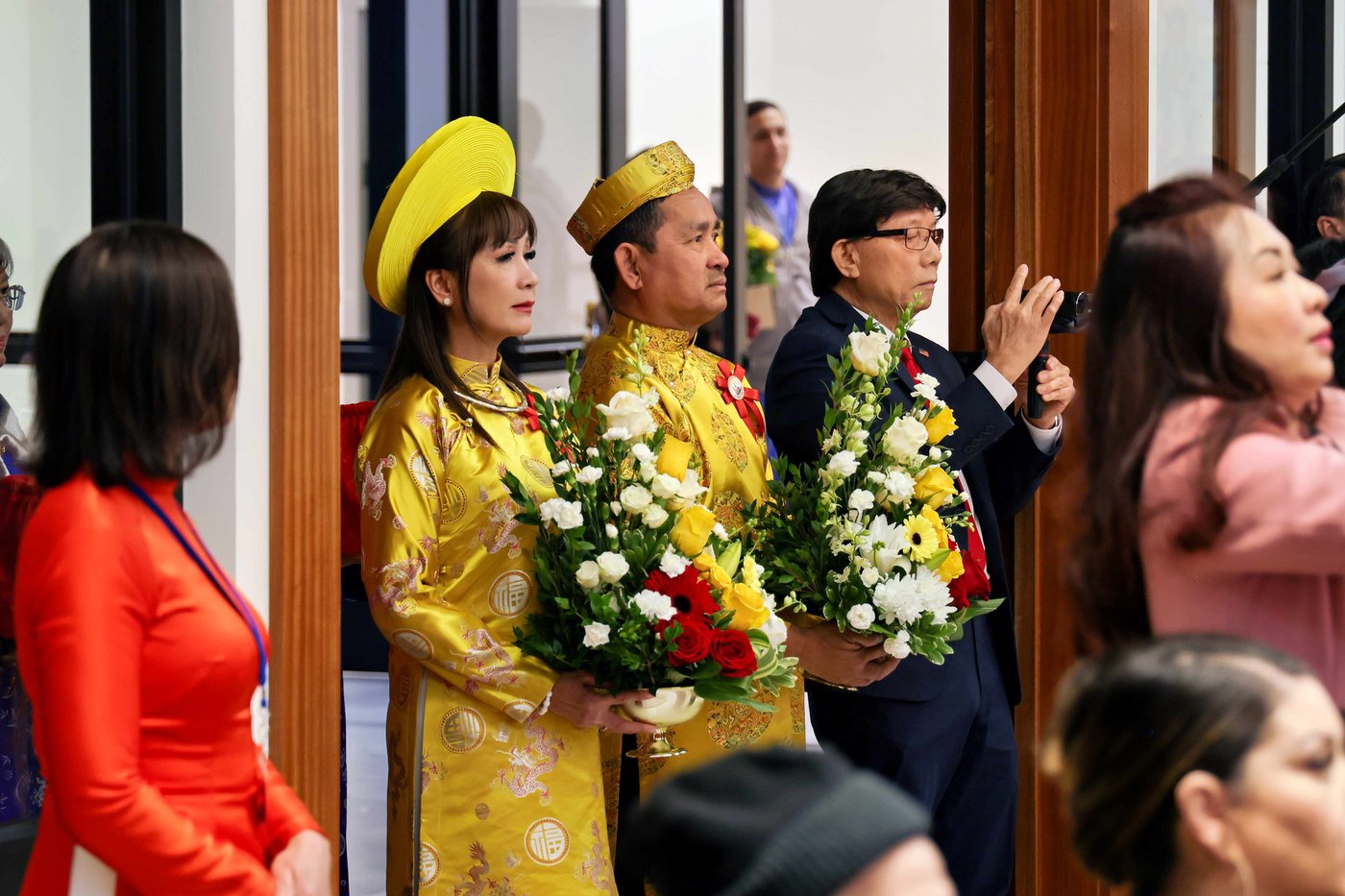
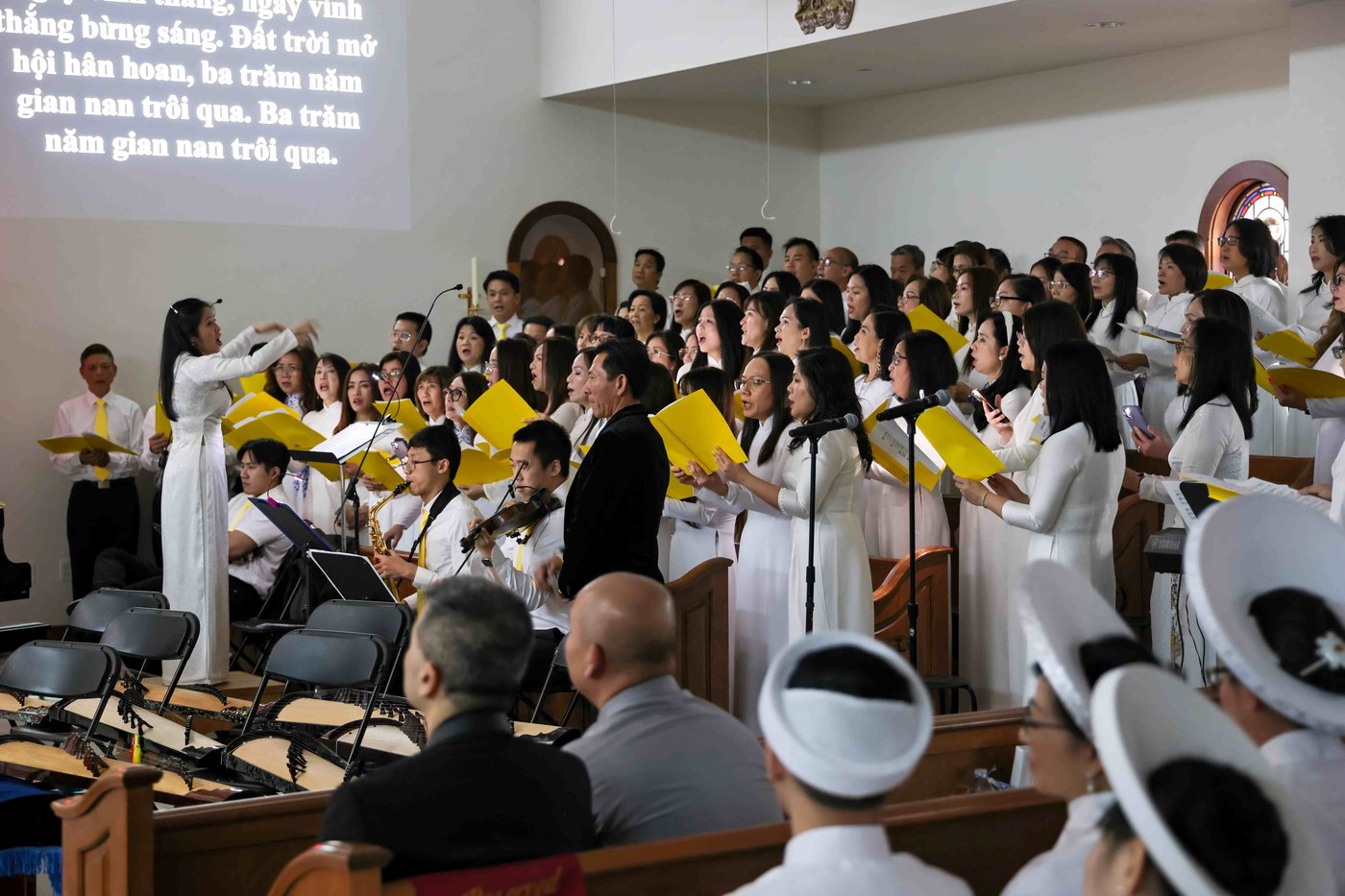
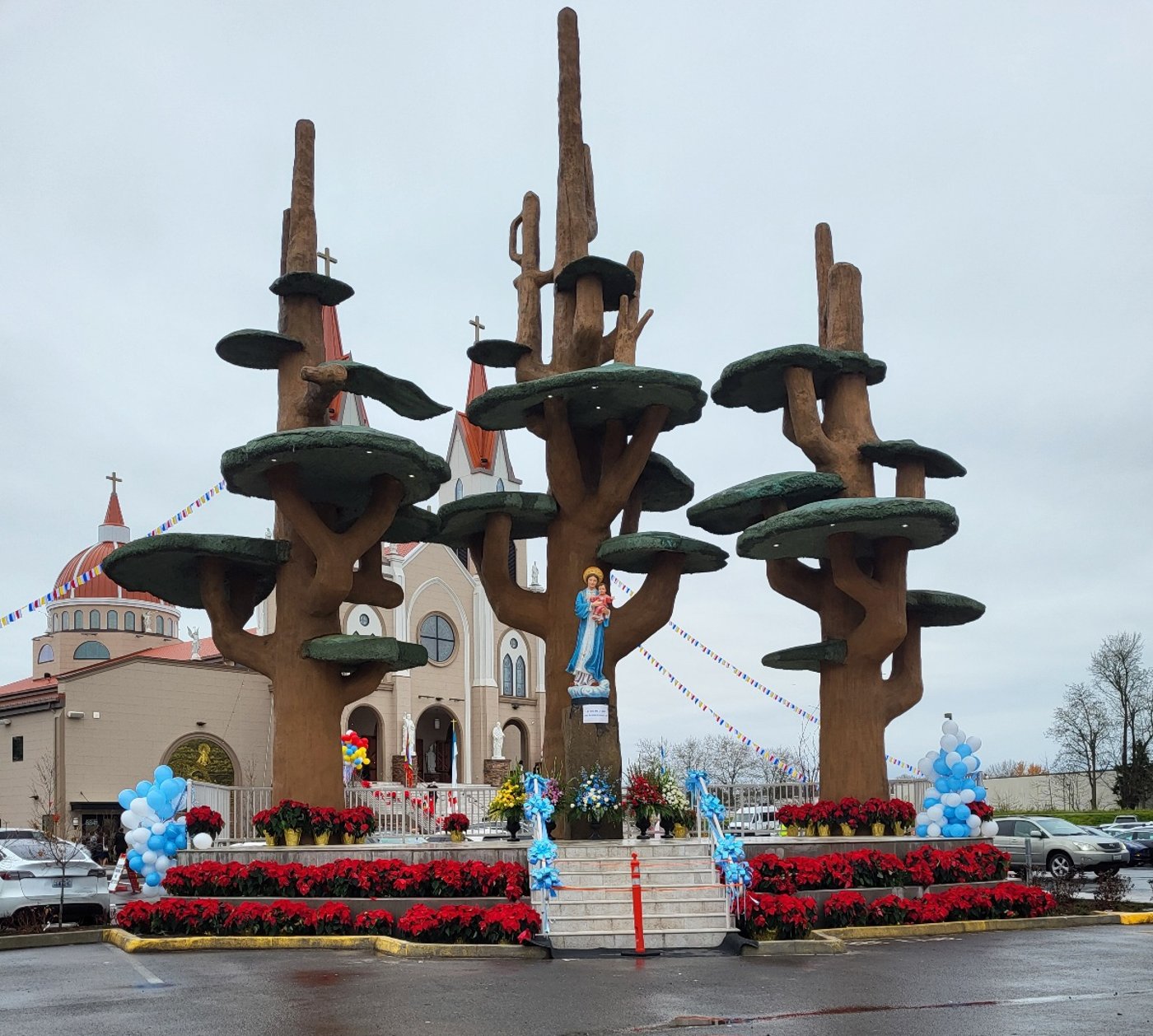
Later on the afternoon of Nov. 24, Archbishop Linh presided over the dedication of the parish’s shrines to Our Lady of La Vang and the Vietnamese Martyrs, followed by Mass in the newly dedicated church.
A dream realized
As he attended the dedication Mass, Luu said, “I could not imagine this is real. It’s (been) a dream for so long. Even three years ago we felt it may not happen,” he said.
“Building a new church meant a lot for me and my [five] children,” said Luu, who was 17 when he and nine family members escaped Vietnam on a small boat in 1980 and ended up in a refugee camp in the Philippines. Nine months later, Luu and four family members came to the U.S. under sponsorship of a Catholic family in Lake Stevens.
“I want to say a miracle happened yesterday,” Luu said the day after the church dedication, giving credit to lots of prayer and the Holy Spirit for guiding Father Dao and the parish council when none of them had built a church before.
“It’s just amazing how God works,” Luu said.
At the end of Mass, Father Dao gave thanks to the many people who have supported the parish community on the journey to its new worship space, including the archdiocese’s building and construction commission and Parish Revolving Fund commission for their “prayer and support and guidance.”
The parish community, from elders to young families, raised about two-thirds of the money needed to build the church, Father Dao said in an earlier interview.
“It’s not easy money at all,” he said. Building a new church is expensive, “but the people’s hearts say, “Yes, we want to pay the price for the new church,’” Father Dao added.
The rest of the money comes from a Parish Revolving Fund loan, which Luu said the parish hopes to pay off in seven years or less.
“There’s countless people that love the church so much, they sacrifice so much,” Luu said. “The church is a place that you know whatever you put in it, will be there for others.”
Blending Vietnamese culture, Catholic theology
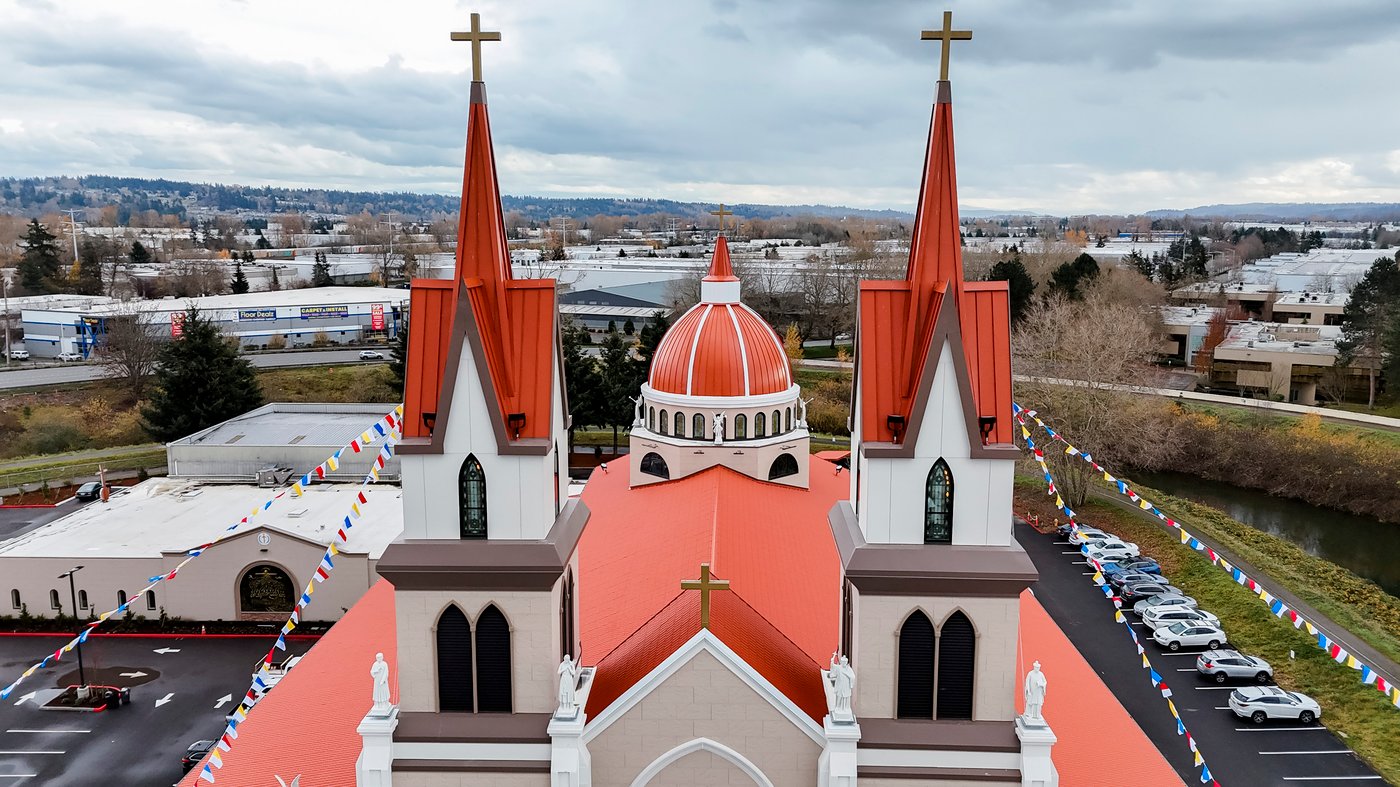
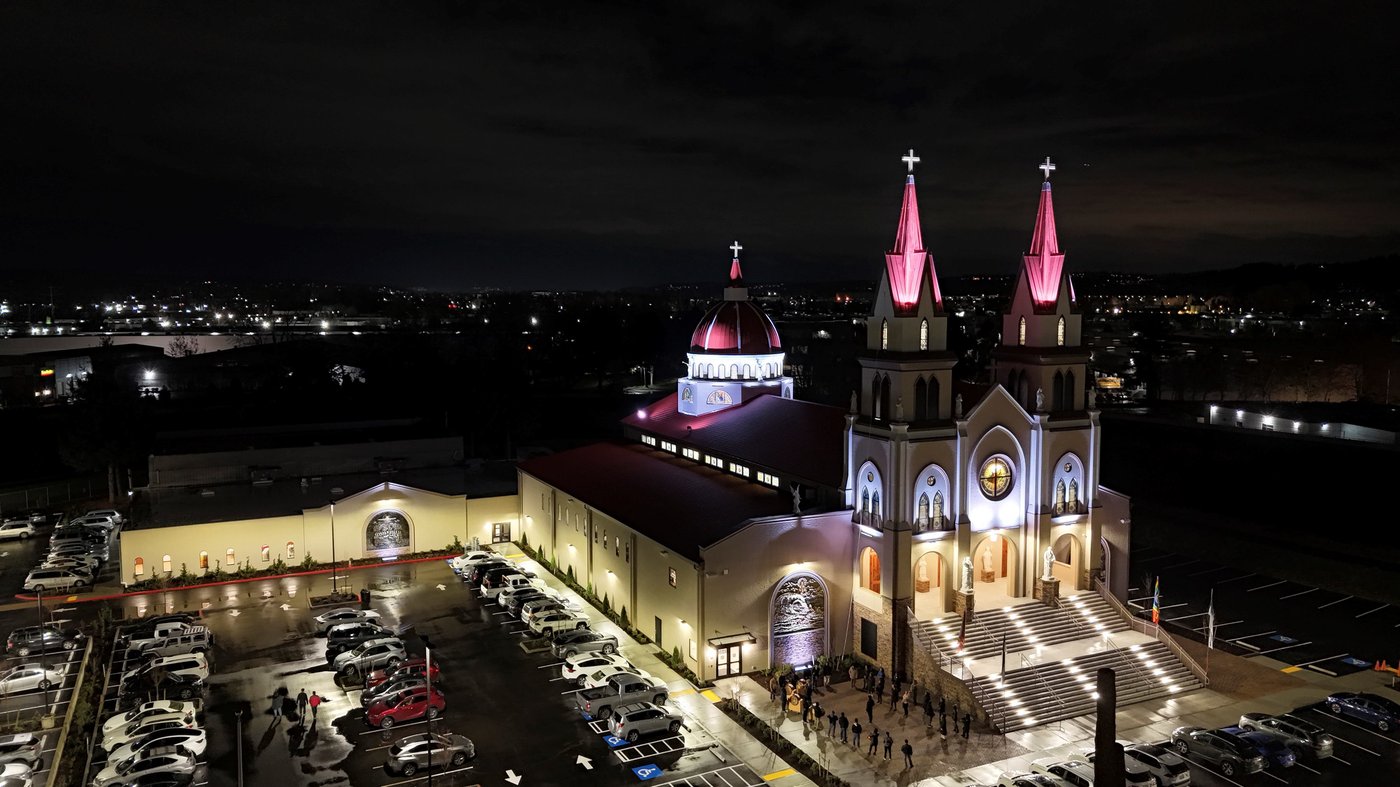
With its twin 110-foot bell towers and central dome, Vietnamese Martyrs Church is hard to miss for anyone driving near the busy intersection of West Valley Highway and South 180th Street in the Southcenter area.
Built on a site along the Green River, the church blends elements of Western and Vietnamese design. The church towers are meant to be reminiscent of the towers of Notre-Dame Cathedral of Saigon, while its dome recalls the dome of St. Peter’s Basilica in Rome, Father Dao told Northwest Catholic during a pre-dedication tour.
Statues of six Vietnamese Martyrs stand at the base of the bell towers. Above the dome, the statues of four angels blowing trumpets are a sign that after Mass, “you have to evangelize, you have to herald the Good News to people,” Father Dao said.

Three of the exterior walls display relief sculptures, one of the Vietnamese Martyrs, the others titled “Journey Across the Sea in Search for Freedom” and “Journey Toward a Future of Hope in the Northwest.”
Statues of St. Peter and St. Paul flank the top of the entry stairs, while just outside the entry doors are statues of Pope St. John Paul II and Pope St. John XXIII, who are “especially beloved by the church and the country of Vietnam,” the pastor said.
The interior of the church is rich in symbolism.
“I tried to integrate the Vietnamese culture into the theology of the church. It has something people can relate to,” Father Dao said.
For instance, the flooring from the baptismal font to the altar includes a series of 12 motifs — the number of Apostles and tribes of Israel, but also meaning “we are the church,” Father Dao said. Each motif features a palm inside a circle, surrounded by a square. In Vietnamese culture, the square represents the earth and the circle, heaven; palms are the sign of martyrdom and victory over sin, Father Dao explained.
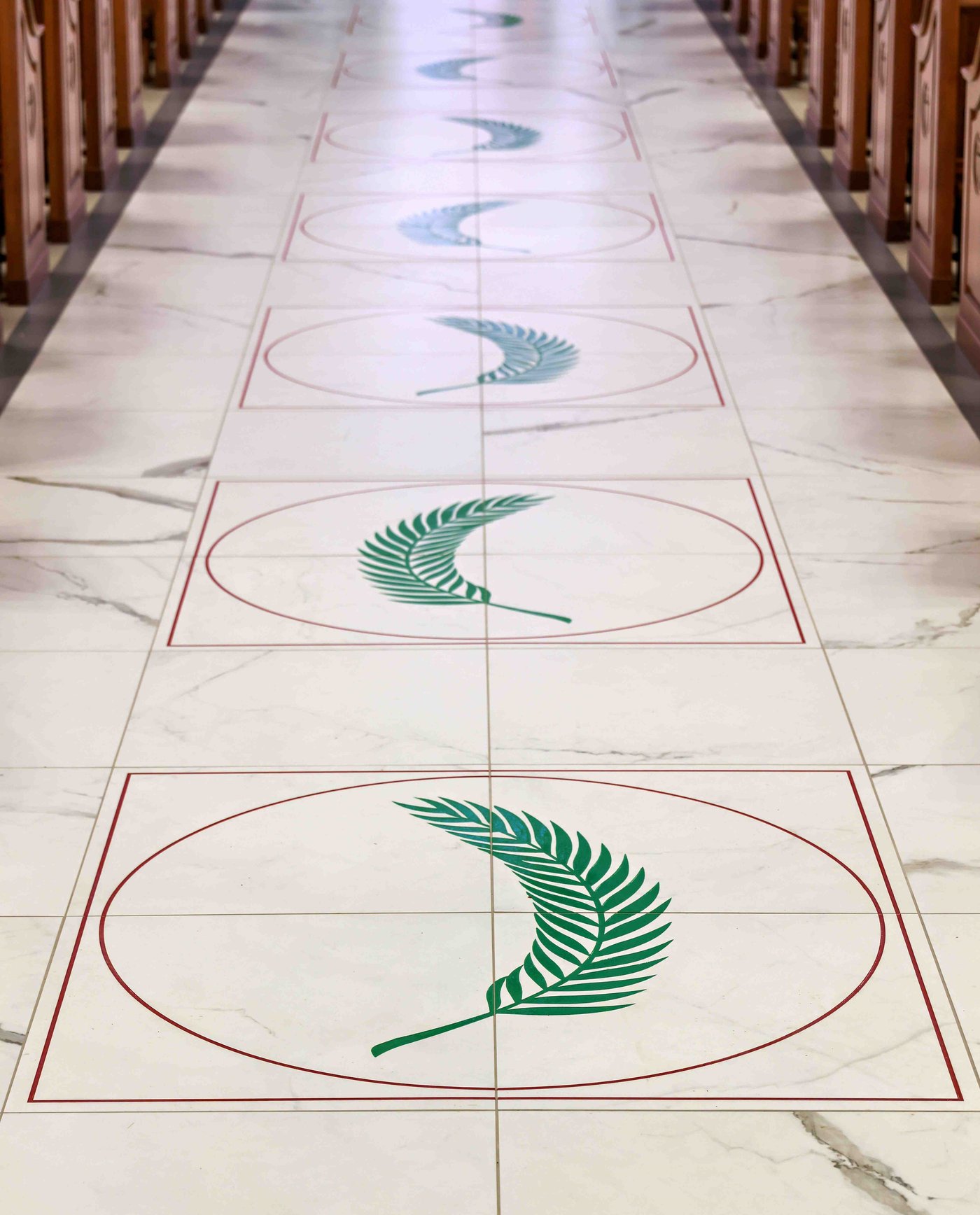
The idea, he said, is that from baptism through the sacrifice of the altar, “you make a lot of renunciation of sin, make sacrifices to die to yourself, to die to sin. … We offer the sacrifice now to become victorious over sin; you are called to be martyrs daily in all things you do.”
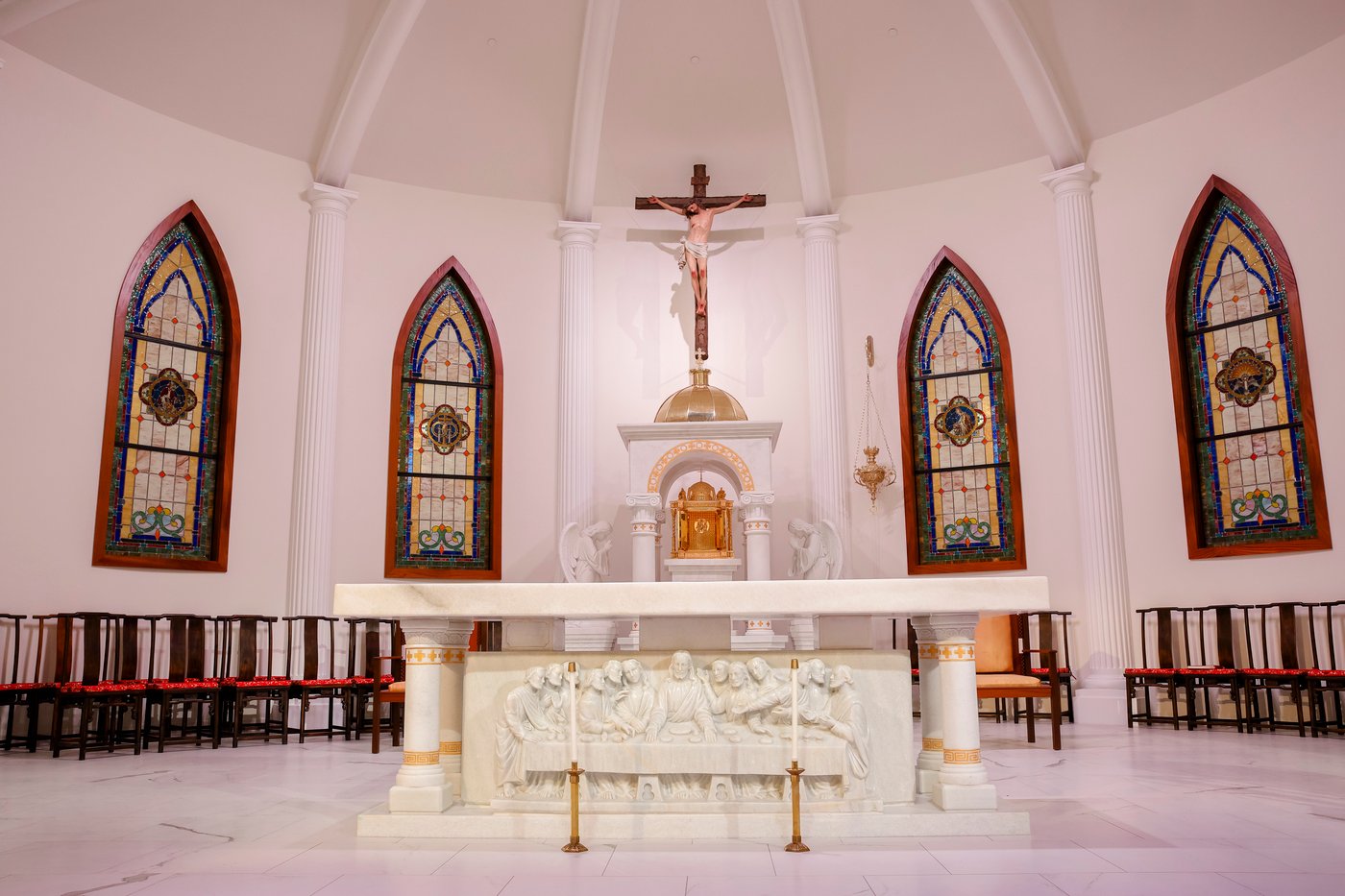
In the sanctuary, a sculpted image of the Last Supper adorns the front of the marble altar. The crucifix hanging above the altar is designed to resemble the trunk of an evergreen tree, symbolizing the Northwest, Father Dao said. The base of the bronze tabernacle is surrounded by the four evangelists, while the doors are decorated with images of Jesus’ last days; on each side is a marble angel kneeling in adoration.
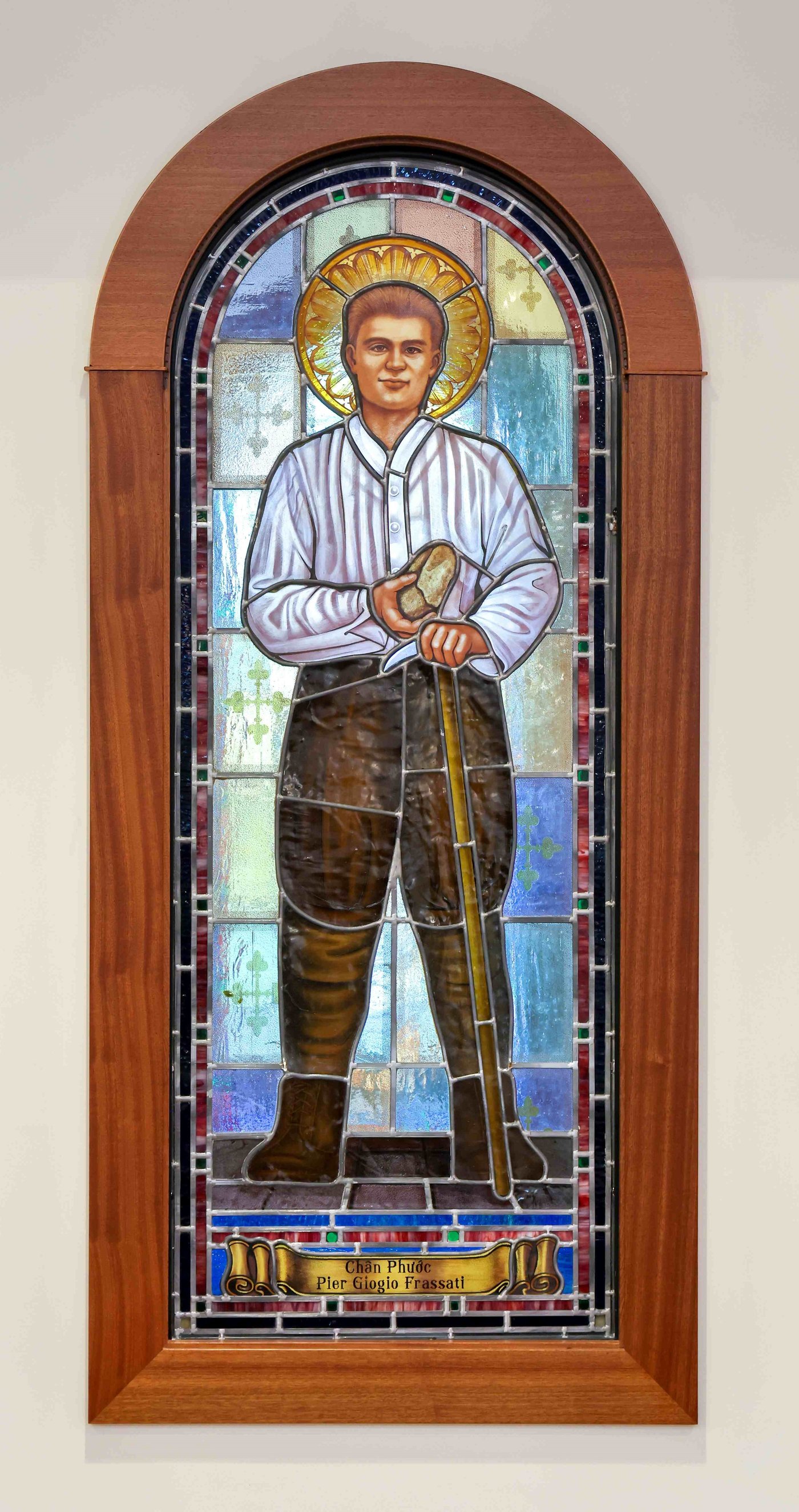
Stained-glass windows, made in Vietnam, line the side walls of the nave as well the walls along a ramp to the parish hall on the ground level. Each window features a saint, blessed or venerable who is important to the parish, is a patron of a parish group — such as St. Cecilia, patron of musicians — or was selected to engage the younger generations, such as Blessed Pier Giorgio Frassati and Blessed Carlo Acutis, who both will be canonized in 2025.
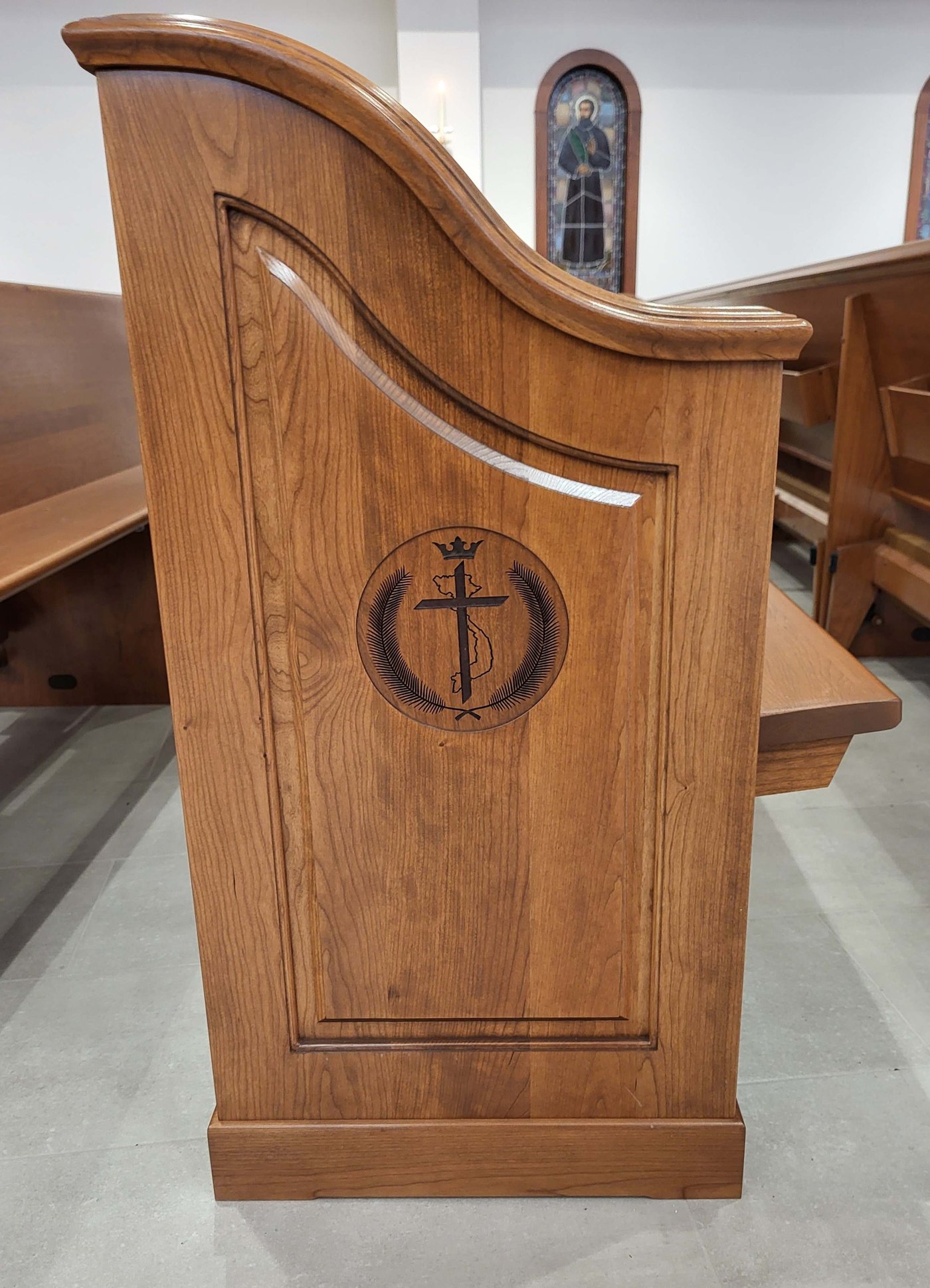
And the ends of each wood pew are etched with the parish’s circular logo — a cross and crown over an outline of Vietnam, with curved palm branches on either side.
The seeds of the Vietnamese community
The first Vietnamese Catholics arrived in the Archdiocese of Seattle in 1975, after Saigon fell to Communist rule. The archdiocese established the Vietnamese Catholic Community, encompassing all of Western Washington, according to a book published by the parish to commemorate the church dedication.
Priests took turns celebrating Mass in Vietnamese at churches in Seattle, Bellingham, Everett, Auburn, Tacoma, Olympia, Longview and Vancouver. The first church for the Vietnamese community was built on Fir Street near downtown Seattle and dedicated as Vietnamese Martyrs by Archbishop Raymond G. Hunthausen on July 10, 1988.
In 2010, Archbishop Brunett established the community as a personal parish. Personal parishes are established “to care for a certain community of the faithful because of language, nationality, or other special need;” in the Archdiocese of Seattle they don’t have geographic boundaries, explained Ben Altenhofen, the archdiocese’s chancellor.
Already outgrowing its space, the growing community needed more room for students to attend religious education and Vietnamese language classes and to accommodate the activities of the Eucharistic Youth Movement. After exploring various locations, the parish chose the Tukwila site — once home to a company that made cable for The Boeing Co., Father Dao said — and received permission from Archbishop J. Peter Sartain to sell its old property and relocate. Archbishop Sartain blessed the temporary church on Jan. 30, 2014.
Although some parishioners wanted to build a new church right away, it would mean tearing down the front of the existing building, where the faith formation classrooms were housed, Father Dao said. Without a place for the children to participate, they might go elsewhere, he explained.
So the priority was building a new faith and cultural education center that was blessed by Archbishop Etienne on May 1, 2021. Construction of the new church, delayed by the COVID pandemic, began in August 2022.
Today, Vietnamese Martyrs Parish has about 2,500 households, with six Masses celebrated each weekend, Father Dao said. Every Saturday, children spend the day at the parish, attending catechism and Vietnamese language classes and participating in Vietnamese Eucharistic Youth Movement activities, followed by a 4 p.m. vigil Mass.
Dedication comes on special feast day
Appropriately, the church was dedicated on the Feast of the Vietnamese Martyrs, 117 individuals canonized by St. Pope John Paul II in 1988. Relics of four of the martyrs were sealed in the altar during the dedication Mass.
“The Vietnamese martyrs hold significant importance to the Vietnamese Catholics as symbols of faith, perseverance and unity in the face of persecution,” Archbishop Etienne said in his homily.
The martyrs included 96 Vietnamese, 11 Spanish Dominicans and 10 French missionaries, executed for their Christian faith between the 17th and 19th centuries, he said.
“The example of the Vietnamese Martyrs inspires contemporary Catholics to continue evangelizing and living their faith boldly despite challenges,” the archbishop said. “Their stories serve as a powerful testament to the transformative impact of faith in times of adversity.”
As with all saints, the Vietnamese Martyrs point Catholics to Christ, “our source of life and salvation,” Archbishop Etienne said. “This is the primary reason we have church buildings, sacred spaces in which to gather to celebrate our life in Christ.”
“May the beauty of this church be only a glimmer of the beauty of the faith it inspires in each of you,” Archbishop Etienne told the congregation. “Our Lady of La Vang, pray for us.”
Watch the dedication events
Click the links below to watch the Nov. 24 dedication of Vietnamese Martyrs Church and the Our Lady of LaVang shrine on the Vietnamese Martyrs Parish campus: